Showing posts with label Feast Days. Show all posts

Tuesday, February 3, 2026

Feast Day Series: Who is St Blaise

 Feast Days Series


Image

St Blaise


Saint Blaise is one of those saints whose story is simple, earthy, and deeply pastoral — and whose legacy the Church has kept very much alive.

 Who was St Blaise.

He was a Bishop of Sebaste (in what is now Armenia) who lived in  the late 3rd / early 4th century.  He was a physician before becoming a bishop, which already hints at his lifelong concern for healing and was martyred during the persecutions under Emperor Licinius.  According to tradition, Blaise:

  • Lived for a time as a hermit in a cave
  • Was surrounded by wild animals, who came to him for healing
  • Refused to abandon his flock when persecution intensified

He was eventually arrested, tortured, and martyred — faithful to the end.


 Why is he remembered?

Saint Blaise is best known as the patron saint of throat ailments — and more broadly of healing and protection.

The tradition comes from a powerful story:

While Blaise was imprisoned, a mother brought him her young son who was choking on a fishbone. Blaise prayed, and the child was healed.

That one quiet, human moment shaped centuries of devotion.


The Blessing of Throats (3 February)


On his feast day, the Church celebrates the Blessing of the Throats, using two crossed candles, usually blessed on Candlemas.

The blessing prays that:

“Through the intercession of Saint Blaise, bishop and martyr, may God deliver you from every disease of the throat and from every other illness.”

It’s one of the most tender sacramentals we have — brief, personal, and bodily — faith touching flesh.


Why he still matters

Saint Blaise speaks quietly into modern life:

  • He reminds us that holiness includes care for the body
  • That prayer and healing belong together
  • That God works through ordinary human needs — breath, voice, fragility

He’s especially close to:

  • Singers, lectors, preachers
  • Those who struggle with illness
  • Anyone who has ever feared losing their voice — literally or spiritually


Monday, February 2, 2026

Solemnity of Presentation of the Lord in the Temple

 Feast Days and Solemnities Series.

The Presentation of the Lord In the Temple.

Solemnity of the Presentation of the Lord

Theme: “My Eyes Have Seen Your Salvation.” Luke 2:22–40

Setting the Scene

Forty days after Jesus’ birth, Mary and Joseph bring Him to Jerusalem to present Him to the Lord, in accordance with the Law of Moses. They come not in splendour, but in simplicity, offering the sacrifice of the poor — a pair of turtledoves.

In the Temple, they encounter Simeon, a righteous and devout man who has been promised that he would not see death before he had seen the Lord’s Messiah. Guided by the Holy Spirit, Simeon takes the child into his arms and blesses God. The prophet Anna is also present — an elderly woman who spends her days in prayer and fasting. She gives thanks to God and speaks about the child to all who are awaiting redemption.

This quiet moment in the Temple reveals something immense: the meeting of promise and fulfilment, waiting and arrival.

Gospel Reflection: Light Revealed in Faithfulness

The Presentation reveals Jesus as the fulfilment of God’s promise, recognised not by the powerful or influential, but by those who have waited patiently and faithfully. Simeon proclaims Jesus as “a light for revelation to the Gentiles and glory for Israel.” Light enters the Temple — not dramatically, but through obedience, humility, and trust.

Simeon’s prophecy also carries a note of suffering. Jesus will be a sign that is opposed, and Mary herself will be drawn into this mystery of pain and redemption. From the beginning, light and shadow stand side by side.

Anna’s presence reminds us that perseverance in prayer bears fruit. Her long years of waiting are not wasted; they prepare her to recognise God’s work when it appears in unexpected form.

Ordinary Time invites us to recognise that God’s greatest work often unfolds quietly — through faithfulness, patience, and openness to the Spirit.

Personal Reflection

This Gospel invites us to reflect on how we wait and how we recognise God’s presence. Simeon and Anna do not cling to certainty or control; they trust God’s promises across a lifetime.

We may long for clarity, answers, or visible signs, yet this feast reminds us that God often comes through ordinary acts of faithfulness — keeping commitments, showing up in prayer, and trusting the slow work of grace.

The Presentation also invites us to consider how light enters our own lives — sometimes gently, sometimes with challenge — calling us to deeper trust.


Questions for Reflection

·    Where do I recognise faithfulness in my own life or the lives of others?

·     How do I respond when God’s work unfolds quietly rather than
 dramatically?

·     What does it mean for Christ to be “light” in my current circumstances?

·     Where am I being invited to trust God’s promises more deeply?

·     How do I hold together joy and challenge in my faith journey?


Closing Prayer

Lord Jesus,
You are the light revealed to the nations
and the fulfilment of God’s promise.
Help me to recognise Your presence
in the quiet faithfulness of daily life.
Teach me to wait with trust,
to welcome Your light,
and to follow You wherever You lead.
Amen.


Monday, October 28, 2024

Feast Day Series: Solemnity of St Simon and St Jude

St. Jude Thaddeus and St. Simon the Zealot, Apostles 

 FEAST DAYS.


ST SIMON AND ST JUDE


The Feast of Saints Simon and Jude is celebrated on October 28, honouring two of Jesus' Twelve Apostles. Though little is known about their lives compared to some other Apostles, each has a distinct identity and story in Christian tradition.


Saint Simon the Zealot

Simon is often called "the Zealot" to distinguish him from Simon Peter. The term "Zealot" could imply he was part of a Jewish revolutionary group opposing Roman occupation, showing his initial zeal for Jewish nationalism before committing to Christ’s mission. Tradition holds that he travelled as a missionary after Pentecost, possibly reaching Persia (modern-day Iran), where he preached and ultimately met martyrdom.


Saint Jude Thaddeus

Saint Jude, also known as Thaddeus, is best known as the Apostle of "lost causes." In the Gospels, he is sometimes called "Jude of James" or "Judas, not Iscariot," to distinguish him from Judas Iscariot, the betrayer of Christ. Tradition holds that he evangelized in regions like Mesopotamia and Armenia. Saint Jude is believed to be the author of the Epistle of Jude in the New Testament, a short but powerful letter emphasizing perseverance and faith.


Why They Are Celebrated Together

The Church celebrates Saints Simon and Jude together partly because of their shared missionary journey, which tradition says ended in martyrdom around the same time and place, possibly Persia. They represent a commitment to spreading the Gospel despite risks, and both are revered for their role in building up the early Christian Church under challenging conditions. In Catholic tradition, Saint Jude is known as the patron saint of desperate or hopeless cases, giving him a particularly cherished place in the hearts of many. Both saints remind the faithful of the sacrifices made to spread the message of Christ and the power of perseverance in the face of trials.


NOVENA TO ST JUDE.

This novena can be prayed with deep trust, especially during times of personal difficulty or when asking for a grace that feels beyond reach. Many find comfort in knowing that St. Jude, as the patron saint of difficult cases, is praying with and for them. It can also be prayed for other people when we intercede for them.


Here is a traditional novena to St. Jude, usually prayed for nine consecutive days, especially when facing difficult situations or seeking hope in seemingly impossible cases.


In the Name of the Father, and of the Son, and of the Holy Spirit. Amen.


Daily Opening Prayer

Most holy Apostle, St. Jude, faithful servant and friend of Jesus, the Church honors and invokes you universally as the patron of difficult and desperate cases. Pray for me; I am so helpless and alone. I implore you to bring visible and speedy help where help is almost despaired of. Come to my assistance in this great need that I may receive the consolation and help of Heaven in all my necessities, tribulations, and sufferings, particularly… State your intention here

and that I may praise God with you and all the saints forever. I promise, O blessed St. Jude, to be ever mindful of this great favour, to always honour you as my special and powerful patron, and to gratefully encourage devotion to you. Amen.


Daily Prayer to St. Jude

Saint Jude, Apostle of Christ and glorious martyr, great intercessor in all difficult problems, today I turn to you with confidence. Help me in my present and urgent petition. In return, I promise to make your name known and cause you to be invoked.


Now, state your intention again


St. Jude, pray for us and all who honour you and invoke your aid. Amen.


Concluding Prayer

May the Most Sacred Heart of Jesus be adored, glorified, loved, and preserved throughout the world, now and forever. 

Sacred Heart of Jesus, have mercy on us. 

St. Jude, worker of miracles, pray for us. 

St. Jude, help of the hopeless, pray for us.


Recite three Our Fathers, three Hail Marys, and three Glory Be prayers

In the Name of the Father, and of the Son, and of the Holy Spirit. Amen.


Friday, October 18, 2024

Feast Days and Saints Series: St. Luke the Evangelist

 FEAST DAYS AND SAINTS


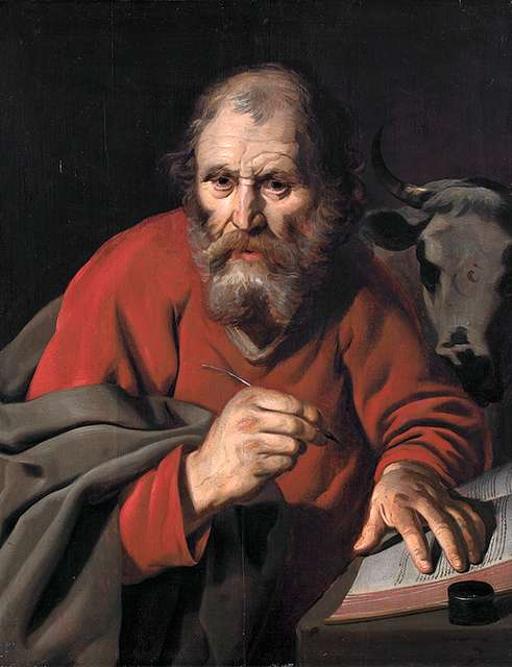
Luke the Evangelist, by Jan Jansz de Stomme

Why Celebrate St. Luke the Evangelist:

St. Luke is not one of the twelve apostles; instead, he is often referred to as one of the Evangelists because he authored one of the four Gospels. His role in the early Church as a companion of St. Paul and a physician underscores his importance in the spread of Christianity, even if he wasn’t one of the original apostles.

The liturgical colour, red is indeed used for St. Luke’s feast day. This colour symbolizes the blood of martyrs and the passion of Christ, highlighting the themes of sacrifice and the active witness of faith, which can be linked to St. Luke’s dedication to evangelization and the message of the Gospel.


St. Luke the Evangelist is celebrated on October 18th in the Catholic Church, and he holds significant relevance for several reasons:

1. Author of the Gospel: St. Luke is known as the author of the Gospel of Luke and the Acts of the Apostles. His writings provide a detailed account of Jesus’ life, ministry, and the early Church, emphasizing themes of mercy, compassion, and inclusion.

2. Companion of St. Paul: Luke was a close companion of St. Paul, contributing to the spread of Christianity in the early Church. His relationship with Paul underscores the importance of collaboration and community in faith.

3. Symbol of the Evangelist: Luke is often depicted as a winged ox or calf, symbolizing sacrifice and service, reflecting his focus on Jesus’ humanity and the importance of service to others.


4. Feast Day: The Church celebrates his feast day to honor his contributions to the Christian faith and to encourage believers to embrace the values he exemplified.


Relevance for Today:


1. Compassion and Inclusion: St. Luke’s Gospel highlights Jesus’ compassion for the marginalized and the importance of reaching out to those in need. In today’s world, this call to inclusivity challenges us to advocate for social justice and to be more empathetic toward others.

2. Faith and Healing: As a physician, Luke symbolizes the healing aspect of Christ’s ministry. This can inspire us to care for both our physical and spiritual well-being and to seek holistic healing in our lives and communities.

3. Listening and Witnessing: St. Luke emphasizes the importance of listening and sharing experiences of faith. His writings encourage us to bear witness to our faith stories, fostering community and connection within the Church.

4. Commitment to Learning: St. Luke’s thorough approach to documenting the life of Christ invites us to deepen our understanding of our faith through scripture study and reflection. His example encourages a lifelong commitment to learning about God’s word and its implications for our lives.

Celebrating the Feast of St Luke the Evangelist helps us to reflect on his example and invites us to live out our faith actively and compassionately.


Thursday, October 17, 2024

Feast Days and Saints: St Margaret Mary Alacoque and St Ignatius of Antioch

 FEAST DAYS AND SAINTS.

Image of St. Margaret Mary Alacoque

Have you ever wondered why the Catholic Church celebrates feast days of Saints?  Why are they important?  In this series, despite being feast days of Saints regularly, I will try to highlight Saints that often do not get a mention because they are 'Optional Memorials.  By highlighting these Saints, we can draw our own inspiration from them for our lives.

This week let us highlight St Margaret Mary Alacoque and Ignatius of Antioch.


ST MARGARET MARY ALACOQUE

St. Margaret Mary Alacoque (1647–1690) is celebrated in the Catholic Church for her visions of Jesus and her role in promoting devotion to the Sacred Heart of Jesus, which remains a central element of Catholic spirituality. Her life and message are deeply significant both for her us:


Why is St. Margaret Mary Alacoque an important Saint? (16 October)


1. The Sacred Heart Devotion: St. Margaret Mary is most famous for her visions of Christ, in which He revealed to her His Sacred Heart, overflowing with love for humanity. In these visions, Jesus expressed His deep desire for all people to know the immensity of His love and mercy. St. Margaret Mary was called to spread this devotion, emphasizing the boundless love of Christ, symbolized by His heart, which remains a core devotion in the Church.


2. Promoter of the First Fridays: As part of her mission to promote the Sacred Heart, Jesus asked her to encourage Catholics to receive Holy Communion on the first Friday of nine consecutive months as a way of making reparation for sins and growing closer to Him. The First Fridays Devotion has become a cherished practice in Catholic spirituality.

 3. The Feast of the Sacred Heart: Through her influence, the Church established the Feast of the Sacred Heart, which is celebrated on the Friday following the Feast of Corpus Christi (the Body and Blood of Christ). This feast highlights the immense, self-sacrificial love of Jesus and calls Catholics to deepen their relationship with Him.

 4. Visions of Christ’s Love and Suffering: In her encounters with Christ, St. Margaret Mary was shown the depth of His love but also His sorrow over humanity’s indifference and ingratitude. She became a conduit for emphasizing the need for reparation, encouraging acts of love and atonement for sins against God’s love.

 5. Her Life of Humility and Obedience:: Despite her visions and mystical experiences, St. Margaret Mary led a life of great humility, often suffering misunderstanding and scepticism, even from her own religious community. Her perseverance, trust in God, and obedience to her spiritual directors made her an example of faithfulness and humility in the face of trials.


RELEVANCE FOR CATHOLICS TODAY


1. The Sacred Heart: A Symbol of Love and Mercy: In today’s world, where many people feel disconnected, unloved, or unworthy, the message of the Sacred Heart remains as relevant as ever. The image of Jesus’ heart, burning with love for all humanity, offers comfort, hope, and a reminder of God’s infinite mercy. St. Margaret Mary’s promotion of this devotion invites Catholics today to deepen their awareness of God’s love and to seek healing through that love.

 2. Reparation and Renewal: St. Margaret Mary’s call for reparation for sins against the Sacred Heart speaks to modern Catholics about the importance of acknowledging personal and communal sins, seeking forgiveness, and striving to restore relationships with God and others. The idea of offering prayers and sacrifices in reparation for the sins of the world has special relevance in our time, where many feel the need for societal and spiritual healing.

 3. First Fridays Devotion: The practice of attending Mass and receiving Communion on the first Friday of each month offers a simple, yet profound way for Catholics to remain grounded in their faith. This devotion encourages regular participation in the Eucharist, which nourishes the soul and fosters a closer relationship with Christ.

4. Consoling the Heart of Jesus: St. Margaret Mary’s message speaks to the idea that Christ still suffers from the indifference, coldness, and sins of humanity. Her call to console the Heart of Jesus challenges Catholics to reflect on how their actions, or inactions, might either hurt or bring joy to Christ. It encourages a personal examination of conscience and a life of greater love, compassion, and devotion.


5.Perseverance in Faith Despite Trial: St. Margaret Mary’s life was marked by suffering, including physical illness, misunderstanding, and rejection. Yet, she remained steadfast in her mission and trust in God’s plan. This offers an inspiring example for Catholics today, who may face doubts, hardships, or skepticism in their own spiritual journeys. Her life encourages believers to remain faithful, even when the path is difficult, knowing that Christ walks with them.


6. Heart-Centered Spirituality: St. Margaret Mary’s message resonates deeply with those seeking a more heart-centered, intimate relationship with God. In a world that often values productivity, success, or intellect over the heart, her focus on the love of the Sacred Heart invites modern Catholics to embrace a more relational and compassionate spirituality.


St. Margaret Mary Alacoque is celebrated for her deep devotion to the Sacred Heart of Jesus and for bringing this devotion into the heart of the Church. Her message of Christ’s infinite love, His sorrow over human sinfulness, and the call to reparation continues to inspire Catholics today. In a world that often feels disconnected from spiritual depth, her emphasis on love, mercy, and a personal relationship with Christ offers a path to healing, renewal, and deeper faith. Through her life of humility, perseverance, and trust in God, she remains a powerful example for those seeking to live out their faith with passion and love.


ST IGNATIUS OF ANTIOCH ( 17 October)


Catholics celebrate St. Ignatius of Antioch as one of the most important early Church Fathers and martyrs. He lived around the end of the 1st century and early 2nd century (c. 35–107 AD) and was the third Bishop of Antioch, following St. Peter and St. Evodius. His significance to the Church is profound, both historically and spiritually. Here’s why his life and teachings are celebrated and how his relevance endures today:


Why is St. Ignatius of Antioch an important Saint?


1. Apostolic Father: St. Ignatius was closely connected to the Apostles, particularly St. John the Apostle. This makes him an Apostolic Father, meaning his teachings are considered part of the foundation of the early Christian Church.


2. Martyrdom: Ignatius was martyred during Emperor Trajan's reign. On his way to Rome for execution, he wrote seven influential letters to Christian communities, encouraging them to remain faithful to Christ and warning them against heresy. His letters are still treasured for their depth of faith, theology, and insight into early Christian life.


3. Doctrine of the Eucharist: Ignatius emphasized the Real Presence of Christ in the Eucharist, calling it the "medicine of immortality" and the "antidote to death." His teachings reinforced the centrality of the Eucharist in Catholic worship and belief.


4. Church Structure and Unity: Ignatius is one of the first to emphasize the importance of the hierarchy in the Church, specifically the role of bishops. He saw the bishop as a sign of unity in the Church, advocating that Christians should remain in communion with their bishops to ensure doctrinal purity and unity in faith.


5. Defender of Orthodoxy: His letters warn against early heresies like Docetism, which denied the humanity of Christ. Ignatius was a fierce defender of the full humanity and divinity of Jesus, laying a foundation for later Christological debates.

RELEVANCE FOR CATHOLICS TODAY


1. Witness to Faith and Martyrdom: In a world where faith is sometimes challenged or marginalized, St. Ignatius is a powerful example of standing firm in belief, even unto death. His courage in the face of persecution encourages Christians today to live their faith boldly and with conviction.


2. Eucharistic Devotion: Ignatius’ profound reverence for the Eucharist speaks directly to the Catholic emphasis on the importance of the Mass and the Real Presence of Christ. His teachings remind Catholics today of the transformative power of receiving the Eucharist in their spiritual life.


3. Call for Unity: In a time of growing division, both within the Church and in society, Ignatius’ call to unity around the bishop and the teachings of the Church serves as a reminder of the importance of remaining faithful to Church authority and doctrine. His emphasis on unity is relevant in addressing modern-day divisions in Christianity.


4. The Role of Suffering: Ignatius viewed his impending martyrdom not as a defeat but as a way of being united with Christ’s suffering and resurrection. This outlook on suffering and sacrifice encourages Catholics to see personal struggles through a lens of faith and redemptive purpose.


5. Christian Identity in a Secular World: Ignatius’ unwavering commitment to his Christian identity, even in the face of Roman persecution, offers an example for modern Christians striving to live authentically in a world that often presents conflicting values.


St. Ignatius of Antioch is celebrated because of his role in shaping early Christian theology, his powerful witness to the faith, and his influence on the structure and unity of the Church. His relevance for Catholics today lies in his teachings on the Eucharist, unity, and steadfast faith in the face of suffering, making him a source of inspiration and guidance for living out the Catholic faith in contemporary times.


Sunday, October 15, 2023

St Teresa of Avila A beacon of Spiritual Light to God

 FEAST DAY SERIES

Unknown, “St. Teresa of Avila,” Musée d’art et d’histoire, Saint-Denis, France

ST TERESA OF AVILA


St. Teresa of Avila, also known as St. Teresa of Jesus, was a remarkable figure in the history of Christian mysticism and spirituality. Born in 1515 in Gotarrendura, Spain, she went on to become a Carmelite nun, a prolific writer, and a renowned mystic. St. Teresa's life and works have left an indelible mark on Christian theology and continue to inspire seekers of spiritual truth and enlightenment. In this blog post, we will delve into the life, spirituality, and enduring legacy of this extraordinary woman.

Early Life and Conversion

Teresa was born into a noble family, but her early years were marked by illness and hardship. Despite her upbringing, she developed a deep sense of piety from a young age. As a teenager, she entered the Carmelite convent of the Incarnation in Avila, Spain, which marked the beginning of her lifelong spiritual journey.

It was during her time at the convent that Teresa experienced a profound spiritual transformation. She had a series of mystical experiences and encounters with God that would shape the rest of her life. Her mystical awakening led her to seek a more contemplative and ascetic life, which led to her eventual reform of the Carmelite order.

The Reform of the Carmelite Order

St. Teresa of Avila is perhaps best known for her role in reforming the Carmelite order. She believed that the Carmelite community had strayed from its original commitment to a life of simplicity, poverty, and deep prayer. In response, she embarked on a mission to restore the order to its roots.

With the support of St. John of the Cross, another influential Carmelite mystic, Teresa founded the Discalced Carmelites, a reform branch of the order. The "Discalced" or "Shoeless" Carmelites embraced a more austere and contemplative way of life, focusing on prayer and spiritual growth. St. Teresa's efforts were not without opposition and challenges, but her determination and faith persevered.

The Interior Castle: A Spiritual Masterpiece

One of St. Teresa's most famous works is "The Interior Castle" (El Castillo Interior), a spiritual masterpiece that continues to inspire readers to this day. In this book, she describes the soul's journey toward union with God using the metaphor of a castle with seven chambers. Each chamber represents a stage of spiritual development, with the innermost chamber symbolizing the soul's ultimate union with the Divine.

Throughout "The Interior Castle," St. Teresa emphasizes the importance of prayer, self-awareness, and surrender to God's will. She offers guidance on overcoming obstacles in the spiritual journey and provides valuable insights into the nature of divine love.

Legacy and Canonization

St. Teresa of Avila's influence on Christian spirituality cannot be overstated. Her writings have had a profound impact on countless individuals seeking a deeper connection with God. She is considered one of the great mystics of the Church and was the first woman to be named a Doctor of the Church, a title bestowed upon those whose theological writings are particularly significant.

St. Teresa's legacy endures not only through her writings but also through the countless monasteries and communities of Discalced Carmelites that continue her work and teachings. Her feast day is celebrated on October 15th, commemorating her enduring impact on the Catholic Church and the world of Christian mysticism.

St. Teresa of Avila's life and teachings are a testament to the power of faith, prayer, and spiritual transformation. Her mystical experiences and writings continue to guide and inspire seekers on their own spiritual journeys. As we reflect on the life of this extraordinary woman, we can draw valuable lessons about the importance of inner contemplation, simplicity, and surrender in our pursuit of a deeper connection with the Divine. St. Teresa of Avila remains a beacon of spiritual light, illuminating the path to a more profound and meaningful relationship with God.

As her feast falls on a Sunday, she is not celebrated this year liturgically. he is a Spanish Carmelite nun, reformer and Doctor of the Church. She is also the patron of Spain, the sick, religious and lace makers.


Friday, August 4, 2023

Feast Day Series: St John Vianney and his relevance for us today.

 FEAST DAY SERIES

Image of St. John Vianney

ST JOHN VIANNEY

St. John Vianney: A Timeless Model of Holiness

In a rapidly changing world, where technology and modernism often overshadow the traditions and spiritual teachings of the past, St. John Vianney serves as a poignant reminder of timeless faith and commitment to the church. Known as the Curé d'Ars, Vianney's life and legacy continue to inspire and guide Catholics today.


The Life of St John Vianney

Born on May 8, 1786, in Dardilly, France, John Vianney grew up amidst the turbulence of the French Revolution. Despite facing numerous obstacles, including limited education and initial rejection from seminary, his unwavering faith led him to become a parish priest in the small town of Ars.

Vianney's work in Ars was transformative. He spent up to 18 hours a day hearing confession and was recognized for his humble life, deep spirituality, and extraordinary ability to read the hearts of his parishioners. His devotion to the Eucharist and love for the poor made him a beloved figure, not only in his parish but throughout the Christian world.

How is this Saint relevant today?

In an era marked by individualism, materialism, and often a disconnect from spiritual roots, the lessons from St. John Vianney's life are more relevant than ever. Here are some areas where his teachings continue to resonate:

  1. Personal Holiness: Vianney's commitment to personal holiness, asceticism, and penance offers a powerful example of what it means to live a Christ-centred life. He reminds us that a strong relationship with God requires ongoing commitment, self-sacrifice, and a constant pursuit of virtues.
  2. Pastoral Care: Vianney's tireless work in the confessional and his genuine love for his parishioners set an enduring example for clergy today. He teaches that being a priest is not just a role but a vocation requiring empathy, understanding, and dedication.
  3. Social Responsibility: His love for the poor and willingness to give away everything he had underscores the Christian responsibility to care for the marginalized. In a world facing increasing inequality, Vianney's actions remind us to prioritize compassion and generosity.
  4. Rejuvenating Faith Communities: At a time when many are disillusioned with institutional religion, Vianney's example of revitalizing his parish through love and dedication demonstrates that faith communities can thrive when they are nurtured with authenticity and enthusiasm.
  5. Encouragement for the Struggling: Vianney's own struggles, including his difficulties in seminary, provide comfort and encouragement for those who feel inadequate or challenged in their faith journey. His life story tells us that persistence and faith can overcome obstacles.


The life and teachings of St. John Vianney remain an inspiring testament to the power of faith, humility, and love. As the patron saint of parish priests, his legacy is a beacon for clergy and laity alike, urging us towards deeper spiritual commitment and a life of service.

In a modern world filled with complexity and distraction, looking back at Vianney's simple, devoted life provides a compass to guide us toward what truly matters. By embracing his teachings, we can find a renewed sense of purpose and connection to our spiritual roots, making his relevance not only historical but profoundly personal and contemporary.


Thursday, August 3, 2023

Feast Day Series: St Dominic

FEAST DAY SERIES.

ST DOMINIC

St Dominic is my favourite saint and so it is no surprise that I would write a post on his feast day.  Now it is important to understand that in Australia and New Zealand, his feast is celebrated on 3 August, whilst the universal church celebrates his feast on 8 August.
The reason for the change is that Mary McKillop ( Australian Saint) is celebrated on 8 August.

St Dominic: Feast Days Series.


St. Dominic Guzmán: A Timeless Guide to Spiritual Transformation

In the annals of history, few figures have left as profound a mark on the spiritual landscape as St. Dominic Guzmán. Born in Caleruega, Spain, in 1170, St. Dominic was a visionary leader, a tireless preacher, and the founder of the Dominican Order. His dedication to the Gospel, intellectual pursuits, and genuine compassion for humanity continue to inspire and resonate with seekers of spiritual growth even today. In this blog post, we delve into the life and teachings of St. Dominic Guzmán and explore how his legacy remains relevant to spirituality in our modern world.

  1. Embracing a Life of Prayer and Contemplation

From a young age, St. Dominic showed an inclination toward deep prayer and reflection. As he grew older, this spiritual yearning only intensified. Dominic spent countless hours in prayer, seeking communion with God and seeking guidance for his life's mission. His devotion to prayer reminds us of the timeless importance of setting aside moments of quiet introspection amidst the noise of our busy lives.

In our contemporary world, where distractions abound, St. Dominic's example encourages us to cultivate a habit of daily contemplation. By doing so, we can align ourselves with a higher purpose and gain insights into our own spiritual paths.

  1. A Heart for the Poor and Marginalized

St. Dominic's compassion for the poor and marginalized was the driving force behind the establishment of the Dominican Order. He recognized the need to bring the Gospel message to those who were overlooked by society, especially during a time of social upheaval and religious unrest.

Today, the world still grapples with numerous social and economic inequalities. St. Dominic's legacy reminds us of the importance of reaching out to those in need, showing empathy, and offering our support. Whether through charitable acts or advocacy, we can honour his spirit by working to alleviate suffering and promote justice.


  1. A Balance of Faith and Reason

St. Dominic was not only a man of faith but also a dedicated scholar. He understood the value of knowledge and education as tools for deepening one's relationship with God and effectively engaging with the world. The Dominicans, the Order he founded, have a rich tradition of combining spirituality with intellectual pursuits.

In the 21st century, where science and spirituality are sometimes viewed as conflicting, St. Dominic's example serves as a bridge between the two. He reminds us that faith and reason can coexist harmoniously, and seeking knowledge can deepen our understanding of the divine.

  1. The Power of Preaching and Dialogue

St. Dominic was renowned for his exceptional preaching skills. His sermons were characterized by their clarity, conviction, and ability to touch hearts. He believed in the transformative power of dialogue and engaged in respectful discussions with people of different beliefs, seeking common ground rather than division.

In our interconnected world, St. Dominic's approach to preaching and dialogue offers valuable insights. Instead of resorting to confrontation or judgment, we can emulate his respectful and compassionate manner to foster understanding, empathy, and unity among diverse communities.

St. Dominic Guzmán's legacy is not confined to the pages of history but continues to be a guiding light for those seeking spiritual transformation in the present day. His commitment to prayer, compassion for the marginalized, integration of faith and reason, and art of meaningful dialogue provide a timeless blueprint for navigating the complexities of our modern world.

As we strive for deeper spiritual connections and work towards a more just and compassionate society, let us draw inspiration from St. Dominic's life, teachings, and unwavering commitment to God's love. By embracing his example, we can create a brighter future where spirituality remains a force for positive change, both within ourselves and in the world around us.